
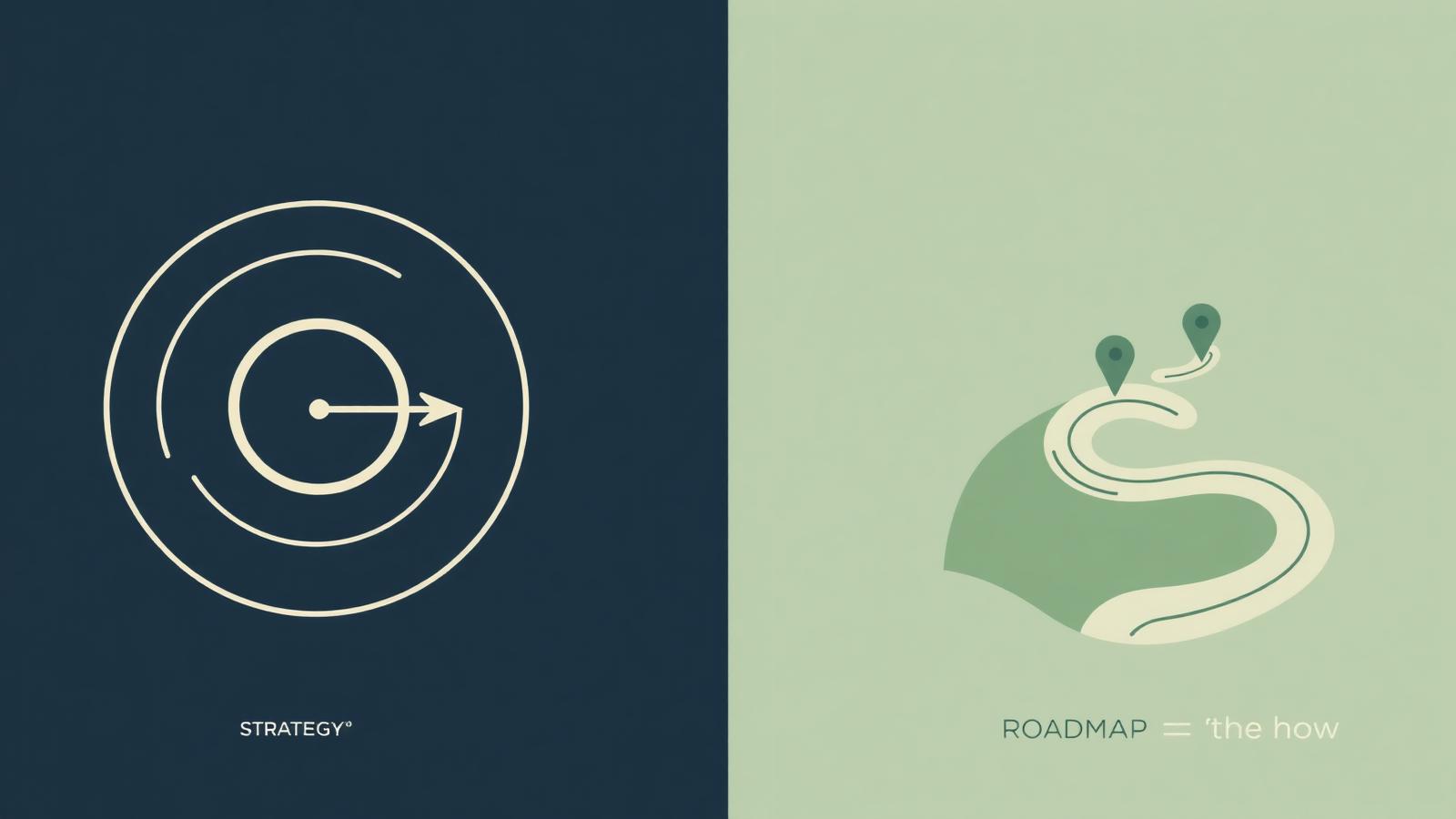
01. Strategy is the game. Roadmap is the moves
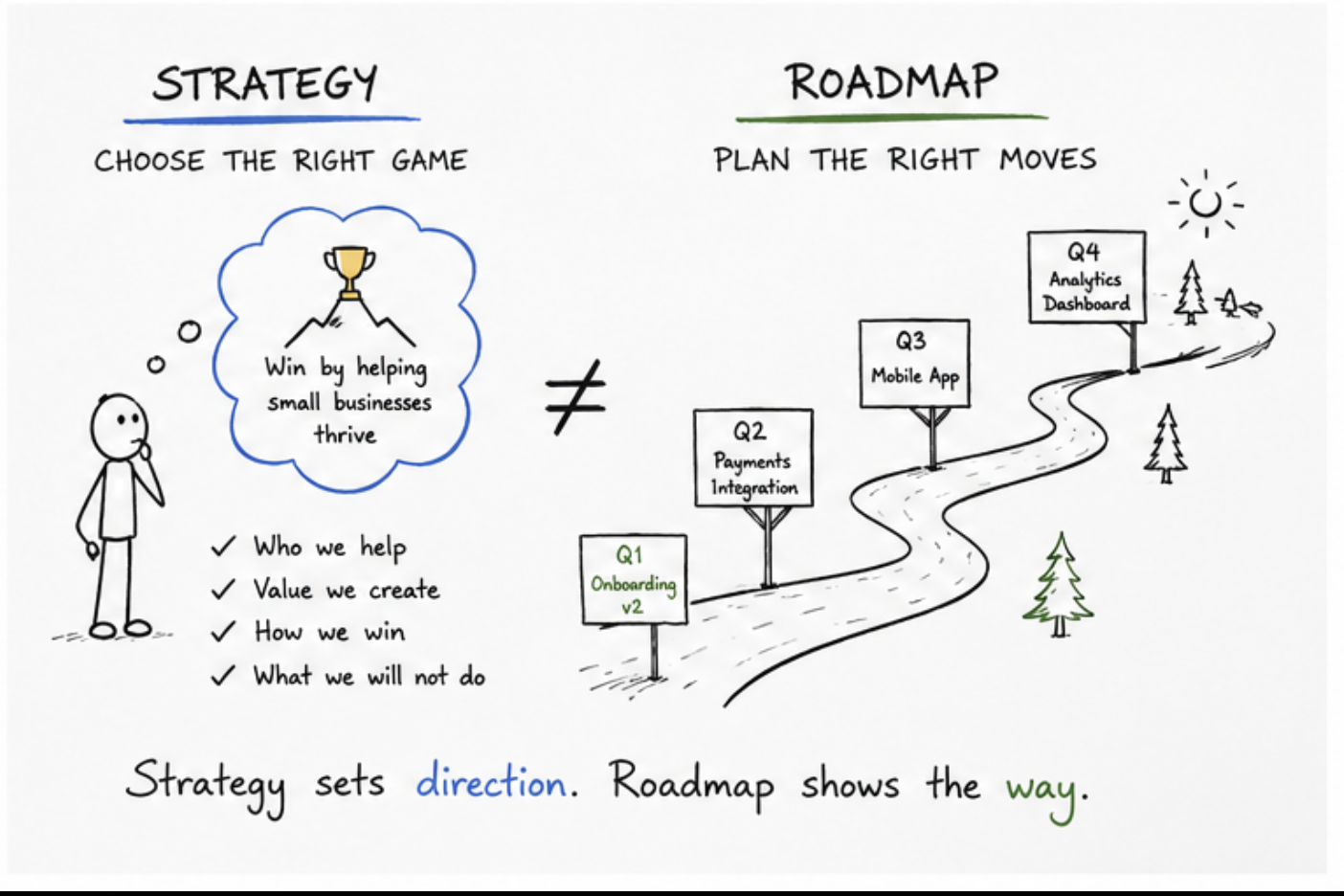
Strategy is a small set of choices about where the business competes, who it serves and how it wins. It is narrow by design. Every commitment it makes is also a commitment to what the business will not do.
A roadmap is the sequence that turns those choices into shipped work. It is time boxed by design. Roadmaps do not decide direction, they schedule it.
Blur the two and the roadmap begins making strategic choices by accident. That is how businesses end up busy, on time and pointed at the wrong outcome.
02. Strategy sets the destination. Roadmap picks the route
A useful strategy names the summit: the market worth chasing, the customer value that unlocks it, the vision that pulls decisions in one direction and the choices leadership will defend under pressure.
The roadmap chooses the route and adapts as the terrain changes. It prioritises the bets, sequences them across horizons and delivers value in increments the business can feel.
Separation keeps both honest. When the terrain shifts, the roadmap moves without the strategy shifting underneath it. When the strategy changes, the roadmap is redrawn, not defended.

03. Ownership at each decision level
Strategy belongs to a product leader accountable to the executive. It is where trade offs get named and bets get sized. A strategy that cannot survive a hard conversation with the CFO or COO is a wishlist.
The roadmap belongs to a product manager accountable to delivery. It is where sequence, dependencies and capacity get honest. A roadmap that cannot survive a hard conversation with engineering is a marketing timeline.
Two owners, one direction. Confuse the altitudes and the strategy softens into aspiration while the roadmap hardens into a wishlist with dates.
04. How they feed each other
Strategy sets the outcomes the roadmap is measured against. Delivery generates the evidence that either validates the strategy or forces leadership to revisit it.
Cadence matters. Strategy is reviewed quarterly or bi-annually, when enough evidence has landed to make the review meaningful. The roadmap is reviewed every sprint or release, when reality has moved and sequence needs to catch up.
At a glance
Strategy vs roadmap, side by side
| Lens | Product strategy | Product roadmap |
|---|---|---|
| Focus | Why we exist and who we serve | What we will build and when |
| Time horizon | Long term, 12 to 36+ months | Mid term, 3 to 18 months |
| Ownership | Product leader, accountable to the exec | Product manager, accountable to delivery |
| Output | Strategy, goals and the key bets | Initiatives, features and sequence |
| Purpose | Make the right choices | Build the right things |
05. Signals that the two are drifting apart
The roadmap is full but no one can name the strategic bet it serves. Delivery is on time but growth, retention or margin has not moved. Leadership asks for more items on the roadmap instead of asking which bet is paying off. New requests land without anything being removed.
Each is the same symptom. The roadmap has stopped being an instrument of the strategy and become a to-do list for the loudest stakeholder.
Common mistakes to avoid
- Calling a roadmap a strategy. A dated feature list is not a set of choices
- Calling a strategy a roadmap. A vision without sequence never ships
- Letting the loudest stakeholder edit the roadmap without revisiting the strategy
- Reviewing the roadmap weekly and the strategy never
- Measuring the roadmap by output shipped rather than outcomes moved